
 I spent last weekend cycling through tobacco country during the peak of this year's harvest, marveling yet again at the beauty of the world's deadliest plant.
If you've never lived in a tobacco state, it's hard to appreciate the stranglehold that the killer weed has on our history and our collective psyche. Here on Tobacco Row, we've grown up with the plant, season after season, watched the field hands pull the suckers and stoop down for the lower leaves. We've smoked boxed Marlboros -- it's hard to live around that much product without becoming a user -- and we've dipped snuff. We've smoked after the morning coffee, after the fifth beer of the evening and after awkward teenage moments in the back seat of a beat-up Ford. We've stained our walls our lungs our lives with tar, burned holes in the carpet and the car seat and gone back for another carton.
 At one time, entire downtowns in North Carolina boomed on the seasonal sale and storage of tobacco and the manufacture of cigarettes. Popular brands were named after our cities. Downtown Durham has Brightleaf Square and a freshly repainted Lucky Strike water tower. Both are constant reminders that tobacco built the town. Times have changed. Today, the old warehouses and cigarette plants have been repurposed into shopping areas and condos.
 Health officials and lawmakers began to kick smoking to the curb in the late 1960s, and today that's where you'll find most of the users, clustered in small huddles outside bars and restaurants and the front door of smoke-free workplaces. The saying is true -- old habits die hard, and people keep on smoking, ignoring the hard realities of cancer and emphysema and wrinkled skin and stained teeth. You can't kill smokers with regulations. Leave that hit job to the cigarettes, which will eventually plant a large part of their local audience in the hard-packed clay of the Tar Heel state.

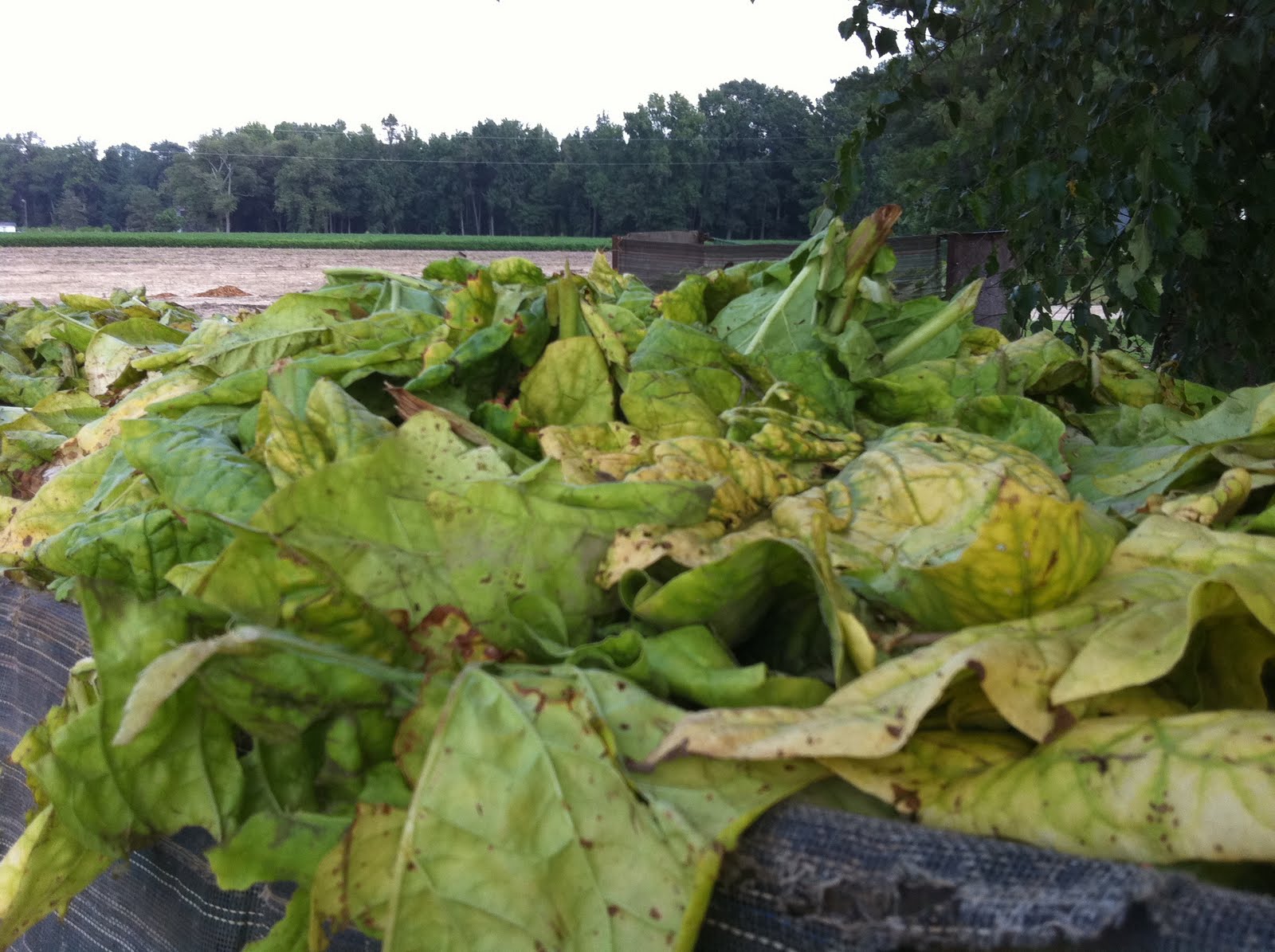 As a high school student in rural southern Virginia, I took a summer job at the Tastee Freeze, dispensing burgers, fries and soft serve. My toughest assignment that summer was trying, with no great luck, to talk the slacks off a charming co-worker from William & Mary. Both my brothers did real work, laboring and broiling in the tobacco fields. They came home each afternoon dog-tired with the thick, sticky tar of tobacco leaves coating their shirts. I guess that's the stuff that tars your lungs, too. Back then, the fortunes of many families were linked to tobacco or one of two local textile mills owned by Burlington Industries. The textile mills are long gone, tobacco lives on.
 Come September, we saw the trucks and wagons, heavy with freshly cured leaf, rumble into the auction market at Planters Warehouse on Clarksville's main drag. We saw the piles of leaf on the floor, heard the auctioneer as he walked the line putting price to product, watched the farmers, flush from the sale, step into the ABC store. I had my own connection to the fields after the crop was put up in the barn. I discovered that the dormant tobacco rows made the perfect hunting grounds for arrowheads, especially after one or two soaking rains. I spent many a fall day scouring the fallow fields for flint and quartz stone gems. I have a shoebox full of them and occasionally I take them out. Flakes of red clay still cling to spear points I found more than three decades ago.
Tobacco is every bit as addictive as opium and many times more deadly, annually killing more than 400,000 U.S. citizens. If nicotine were treated like any other drug, the government would send in the troops, burn the fields, spray toxins from helicopters and render the crop unusable. But it's not treated like any other drug. Tobacco is a government sponsored assassin; in the past 15 years, tobacco subsidies have totaled close to $1 billion, including $203 million in 2009. And so, for the next few weekends, we'll ride the perfect cycling roads of southern Virginia and eastern North Carolina, enjoying the day and marveling at field after field of the world's deadliest plant.





 . . . the classic


